
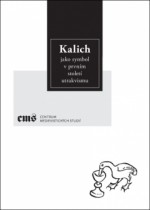
Kalich jako symbol v prvním století utrakvismu
A collective of authors representing various disciplines of historical research examines the role of the chalice in the religious and public life of the fifteenth century. The volume is devoted not only to the theoretical justification and practical introduction of Utraquism in 1414, but above all to the cultural-historical context of communion under both kinds in the subsequent development of Hussitism.
The first century of Utraquism makes it possible to trace shifts in meaning between learned and popular spheres, between Hussite and Catholic environments, and between written and visual forms of expression. The individual contributions focus on the symbolic function of the chalice, while also highlighting its limits and the emergence of alternative means of identification in the fifteenth century.
Pavel Soukup – Ota Halama
Language: Czech
Place: Prague
Year: 2016
Pages: 241
ISBN: 978-80-7007-474-9
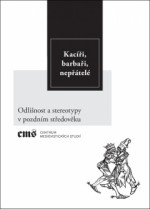
Kacíři, barbaři, nepřátelé: Odlišnosti a stereotypy v pozdním středověku
The studies collected in this volume examine textual constructions of otherness with regard to the stereotypical representation of the “other.” Who was perceived as the “other” in the Middle Ages? How was this figure portrayed by contemporary authors, and what role did it play in narrative texts?
These and related questions are applied in particular to the phenomenon of Hussitism and its reception in contemporary Europe.
Vojtěch Bažant – Věra Vejrychová
Language: Czech
Place: Prague
Year: 2016
Pages: 304
ISBN: 978-80-7007-456-5