
Podcast Dějiny bez konce – host Martin Šorm
V podcastu Dějiny bez konce vystoupil náš pracovník Martin Šorm, kde mluvil na téma: Husitství v zajetí nacionalismu a politiky dějin, Šmahelův odkaz a Kingdom Come
27-02-2025 13:45:07

V podcastu Dějiny bez konce vystoupil náš pracovník Martin Šorm, kde mluvil na téma: Husitství v zajetí nacionalismu a politiky dějin, Šmahelův odkaz a Kingdom Come


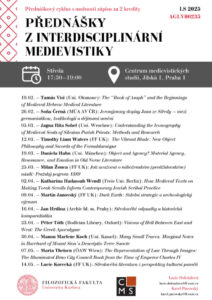
Série přednášek vzniklá ve spolupráci s Filozofickou fakultou UK
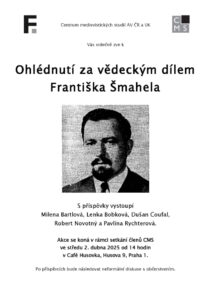
Ohlédnutí za vědeckým dílem Františka Šmahela Datum: 2. 4. 2025 14:00 Místo konání: Centrum medievistických studií Jilská 1, Praha 1 Pozvánka

Za předním českým historikem, profesorem Františkem Šmahelem, se ohlíží řada českých medievistů. Mezi nimi Pavel Soukup v časopise Host 7 dní online, Martin Nodl v tištěném Salonu Práva, Pavlína Cermanová v Magazínu Víkend Dnes a Robert Novotný v Respektu. Texty dostupné online přinášíme v prolincích.

Přednášející: Marcin Kurdyka Datum: 27. 2. 2025 17:30 Místo konání: Studovna CMS Jilská 361/1, 110 00 Praha 1 – Staré Město, Česko Anotace Na 134. Jourfixu vystoupí
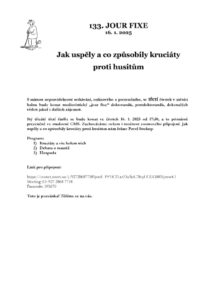
Přednášející: Pavel Soukup Datum: 16. 1. 2025 17:30 Místo konání: Studovna CMS Jilská 361/1, 110 00 Praha 1 – Staré Město, Česko Zoom Join Zoom

Výročí 820 let od údajného svatořečení sv. Prokopa, které uplyne v roce 2024, je inspirací pro uspořádání vědecké konference, která se bude věnovat jak tomuto světci, tak sázavskému klášteru jako významnému centru náboženského života a proměnám kanonizačních procesů od středověku po současnost.